Bandung, 1922 — 1994 · a living catalogue raisonné
The documented record of Sudjana Kerton
Artist-reporter of the Indonesian Revolution, student in Paris and New York, honoured by UNICEF — and, from his 1976 return to Dago Hill, the painter of everyday life in West Java. This catalogue documents his works, exhibitions, collections and literature, entry by entry, each fact cited to its source.
“In my art, I feel that each specific subject I paint has become part of my inner feelings since first encounter.”
Sudjana Kerton — kertonart.com
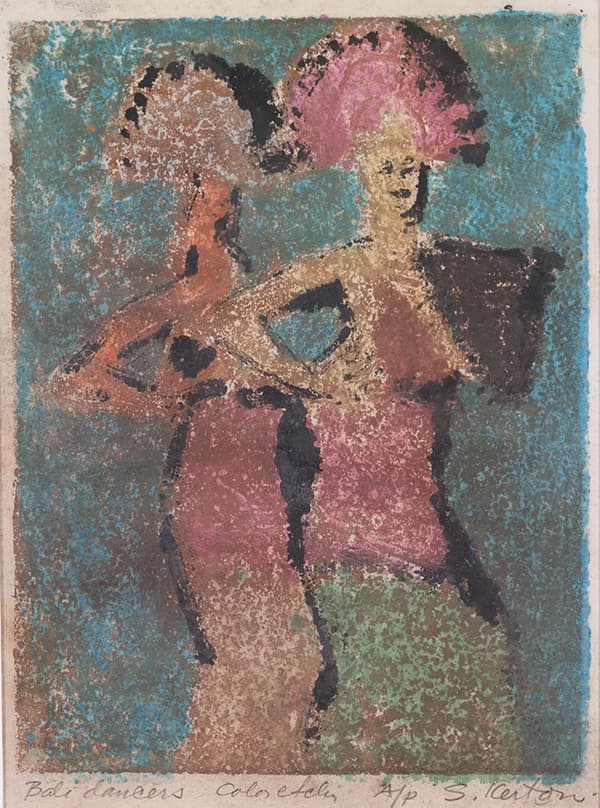
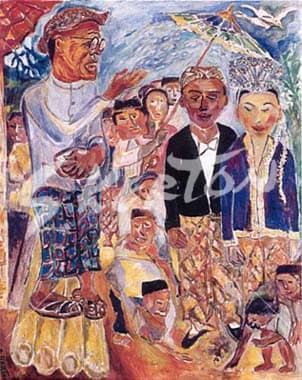
The artist
From the Revolution to Dago Hill
- 1922Born 22 November in Bandung, West Java
- 1945–49Artist-reporter for Usmar Ismail’s newspaper Patriot through the Revolution
- 1950Invited to the Netherlands by the Dutch cultural foundation Sticusa — among the first Indonesian artists to go to Europe on a cultural exchange
- 1951–55Art Students League, New York — painting with Kuniyoshi, printmaking with Sternberg and Barnet
- 1964UNICEF chooses his 1956 woodcut Homeward for its worldwide Christmas cards
- 1966Commissioned to paint a mural for the Indonesian Embassy, The Hague
- 1976Returns to Bandung and builds his studio-gallery on Dago Hill, Sanggar Luhur
- 1994Dies 6 April in Bandung, aged 71
- 1997Nineteen paintings stolen from the family’s gallery in Bandung
- 2006–07“The Lone Wolf: The Art of Sudjana Kerton,” a solo exhibition at the Honolulu Academy of Arts
Sudjana Kerton (born Bandung, West Java, 22 November 1922; died Bandung, 6 April 1994) was an Indonesian painter whose half-century career runs from the drawings he made as an artist-reporter of the Indonesian Revolution, through Amsterdam, Paris, New York and Mexico, to the crowded, humorous canvases of everyday West-Javanese life he painted after coming home to Bandung in 1976.
Largely self-taught, he began in Bandung painting portraits and still lifes. His first guide was his cousin Kendar Kerton, seven years his senior; when Kendar was dying of tuberculosis in 1939 he asked Sudjana to carry on his work, and from then on Sudjana signed his paintings "S. Kerton" in his memory (Astri Wright, The Jakarta Post, 1994). He also learned from European painters working in Bandung — the estate names Jos Pluimentz, Ries Mulder and Henk de Vos — and during the Japanese occupation exhibited with the young Indonesian painters who gathered at the Keimin Bunka Shidōsho cultural centre in Bandung and Jakarta.
Read the full biography, chronology & exhibitions →On 2 February 1997 nineteen of Sudjana Kerton's paintings were stolen from the Sudjana Kerton Gallery — the family's studio-gallery in Bandung. The theft was reported to the Bandung police, whose special team worked with the Jakarta police and Interpol (The Jakarta Post, 6 February 1997); a week later the paper published the list of the nineteen works with their dates and sizes (The Jakarta Post, 13 February 1997). Critics at the time called it the largest theft of a single artist's works in one incident (Amir Sidharta, 1997); the estate's own history describes it as "the largest art theft in the history of modern art" (kertonart.com).
Each register entry is a full catalogue entry flagged STOLEN, with its image, date, medium and dimensions, so that it remains visible to the trade, to auction houses and to researchers — the documentation that makes stolen works hard to sell and possible to recover.
Selected works, 1950–1989
Paris, New York, Mexico, Bandung
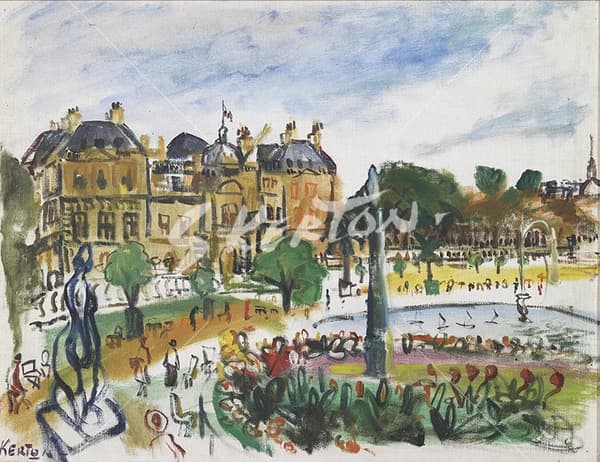
SK-P0039Jardin du Luxembourg
Paris, 1950 · Oil on canvas
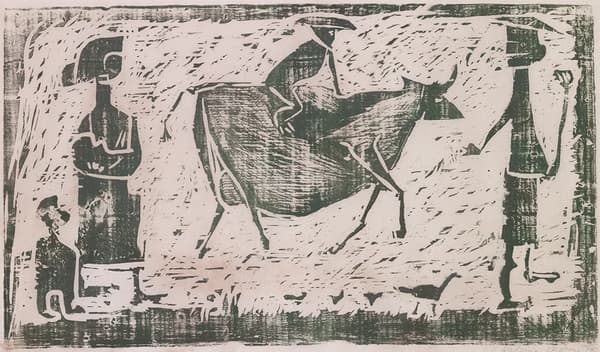
SK-PR0001Homeward
New York, 1956 · Woodcut
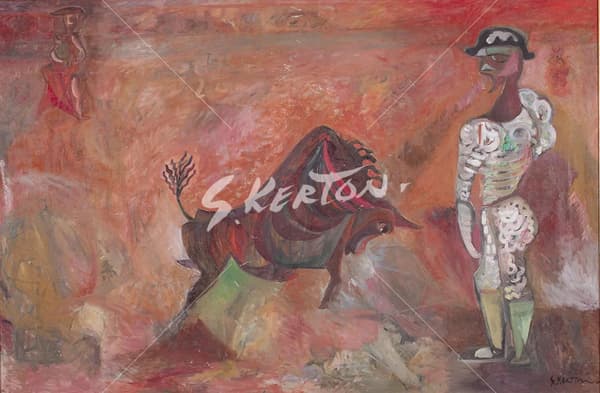
SK-P0017Bullfight
Mexico, 1963 · Oil on canvas
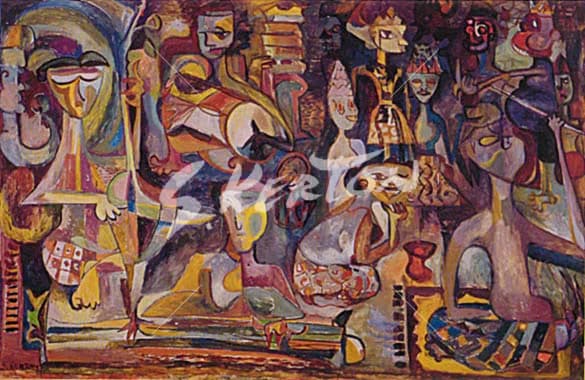
SK-P0084Wayang Golek Performance
New York, 1967 · Oil on canvas
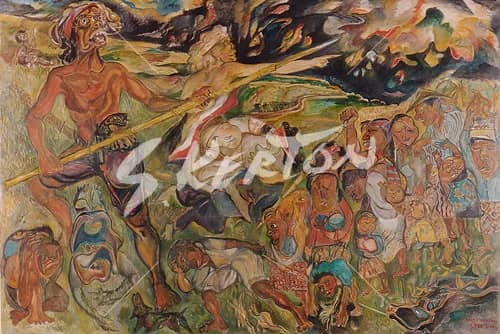
SK-P0011Bamboo Runcing
Bandung, 1980 · Oil on canvas
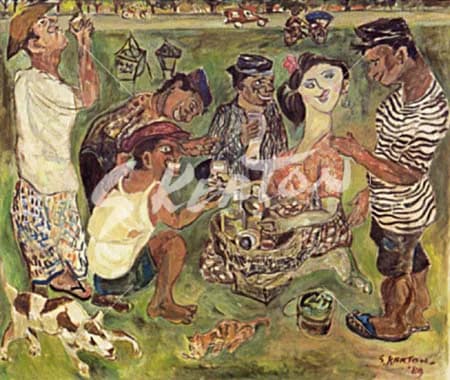
SK-P0029Flirting with the Jamu Lady
Bandung, 1989 · Oil on canvas